
Full Succession pass for Preta Carbon Ltd.
To translate a complex piece of climate technology (BioChar Kilns) into a compelling narrative for investors, farmers, and land stewards. The goal was to cut through the engineering jargon and marry the hardware with a purpose-driven mission.
This project was the laboratory for the 'Three Successions' method. Moving from a feature-led 'Sales' approach to a value-led 'Stewardship' approach, sustained by trust, not pressure.
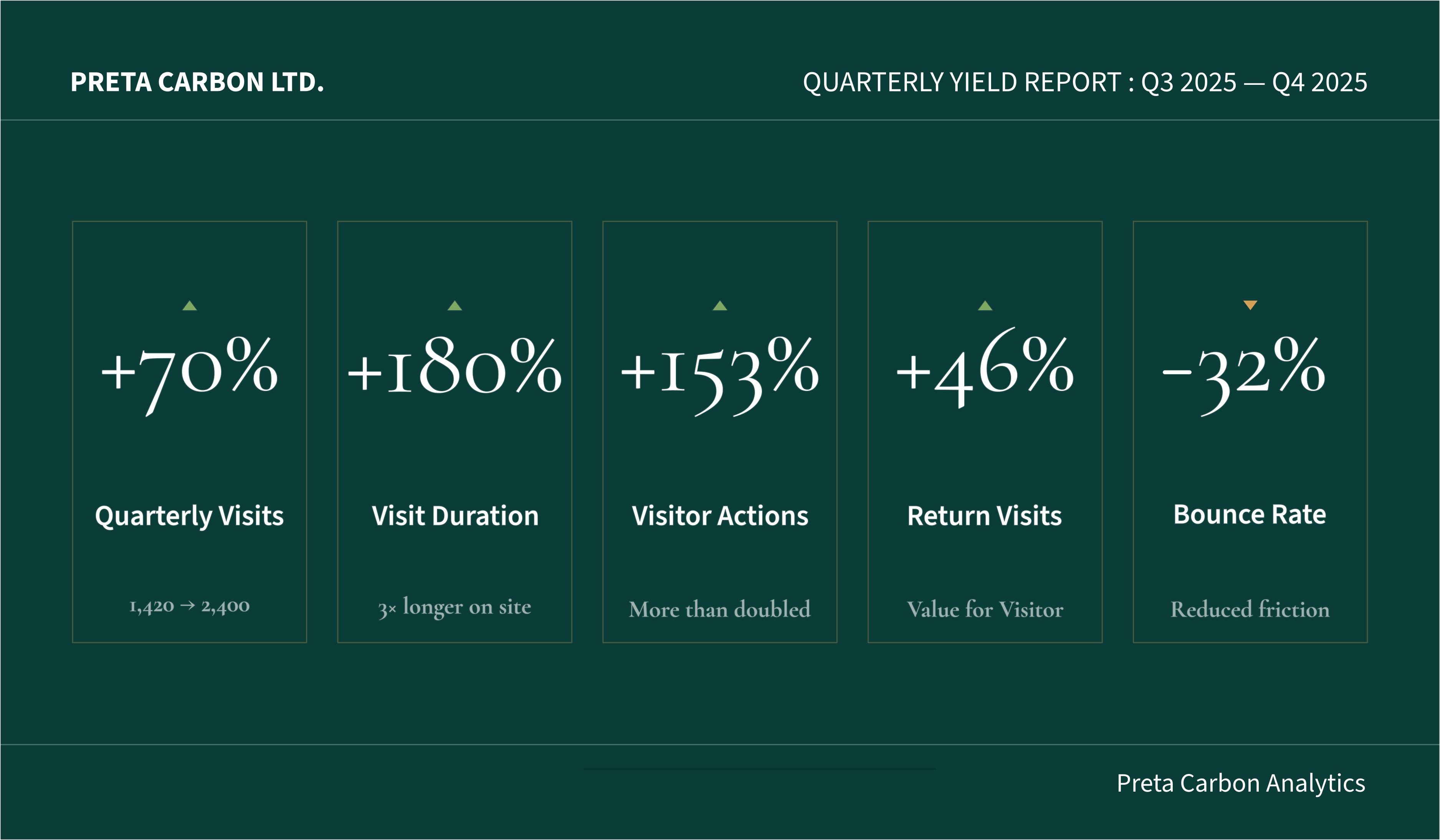
The refined messaging didn't just attract more visitors; it attracted the **right** visitors — aligned operators who returned to engage deeply with the technical specs.
Remediation
Filtering the Jargon, Restoring Clarity
The early language of Preta Carbon was choked with sediment. It relied on technical jargon that impressed engineers but alienated farmers, alongside generic sustainability buzzwords that carried no actual weight.
A full language audit was applied. Technical terms blocking comprehension were identified and replaced with grounded equivalents. Sustainability claims without supporting evidence were either strengthened or removed.
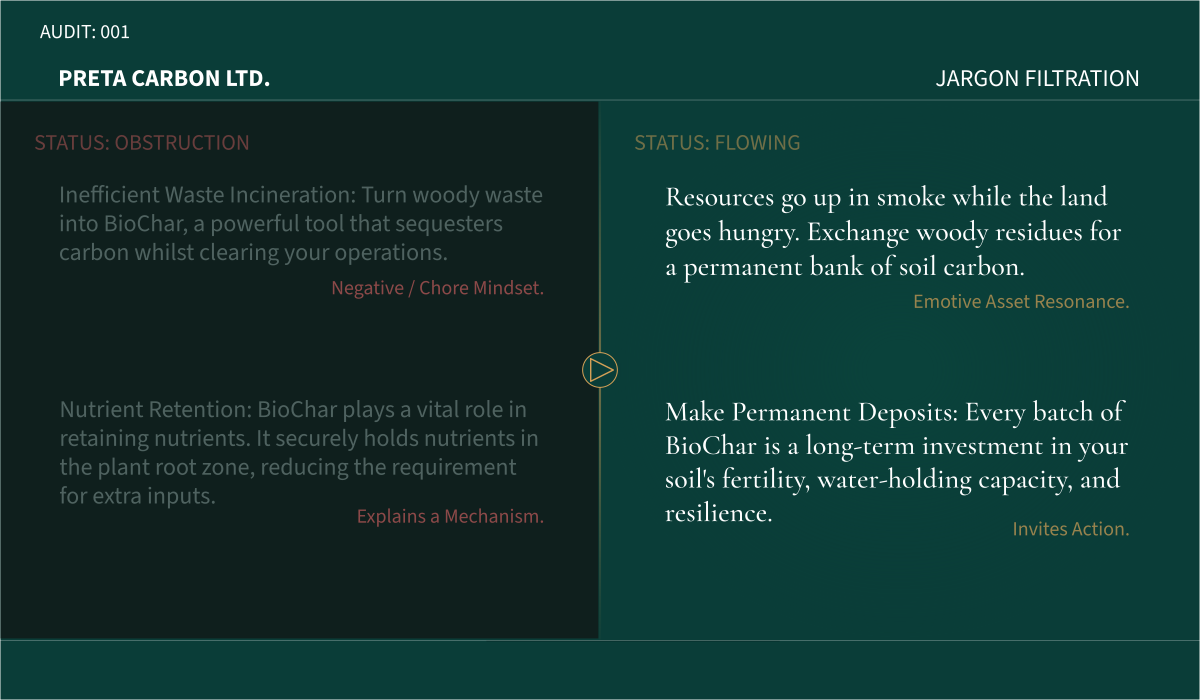
The early version listed features as abstract benefits. The revised version transforms them into a narrative journey with active verbs and a clear destination. The reader becomes the protagonist.
The Source
Establishing the Source
With the sediment cleared, the next requirement was a central narrative — a 'Why' that could speak to investors about asset security, and to permaculturists about soil fertility, using the same underlying logic.
This was anchored in the **Soil Bank** metaphor.
| Banking Language | Land Steward Reality |
|---|---|
| Open an account | Start making BioChar |
| Make deposits | Convert waste to char |
| Build principal | Accumulate soil carbon |
| Earn dividends | Improved yields and soil interactions |
| Long-term investment | Legacy for future generations |
| Financial sovereignty | Land sovereignty |
This metaphor reframes organic waste as **long-term soil equity** — speaking to practical, ROI-minded investors without relying on extractive corporate phrasing.
The Source framework doesn't live in a document — it becomes the decision-making filter for every subsequent piece of copy. Does this sound like us? Does it reinforce the core position? Does it hold up under scrutiny?
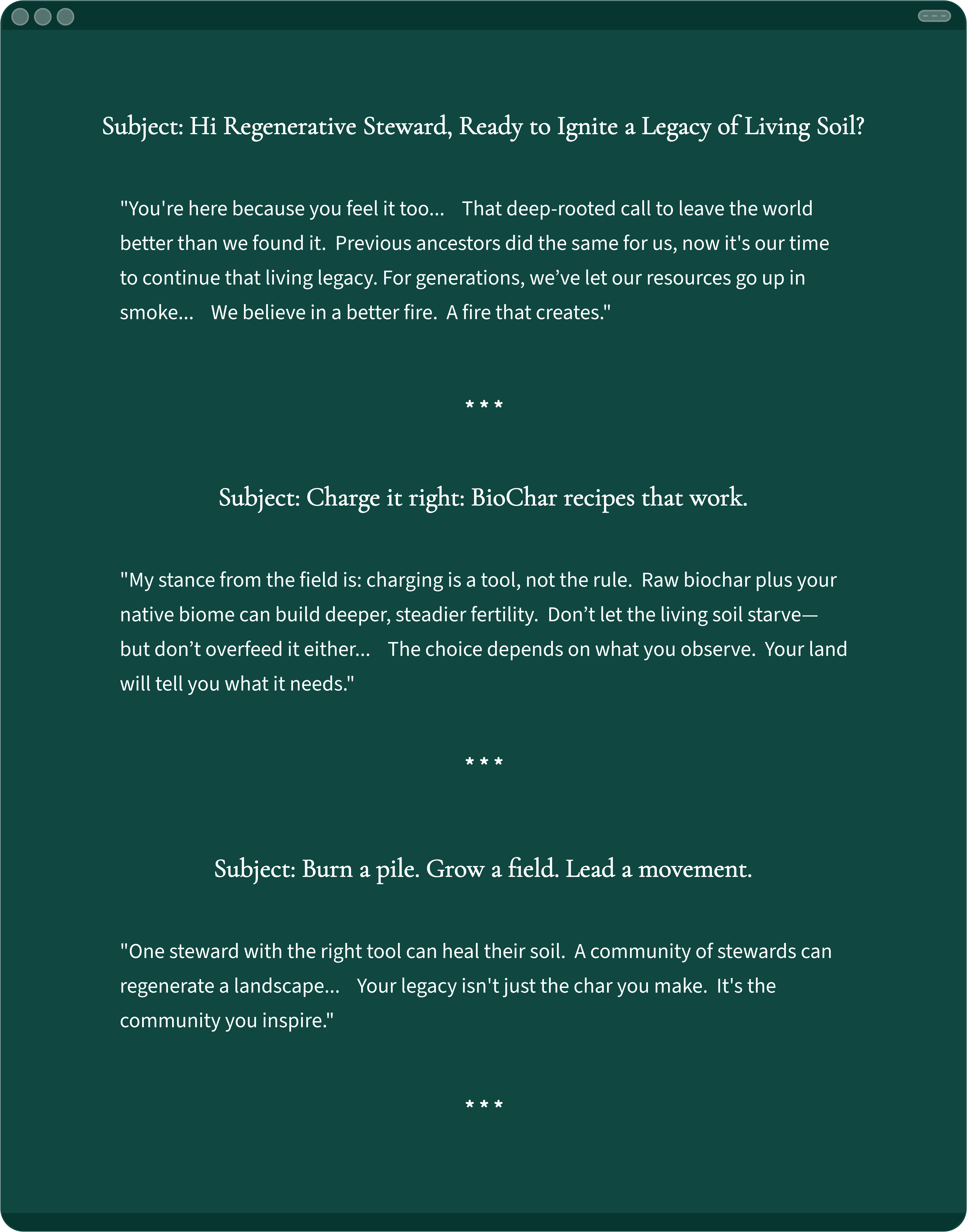
Once that filter was in place, it was applied to every customer touchpoint — including a 7-part email sequence designed to guide new subscribers from initial curiosity to informed commitment.
The Source isn't a document. It's a decision-making tool.
The Estuary
Building the Digital Habitat
With the source established, the visible channel was built — a website structured not as a product brochure, but as a digital habitat where stewards arrive, orient themselves, explore the depth, and find the next best step.
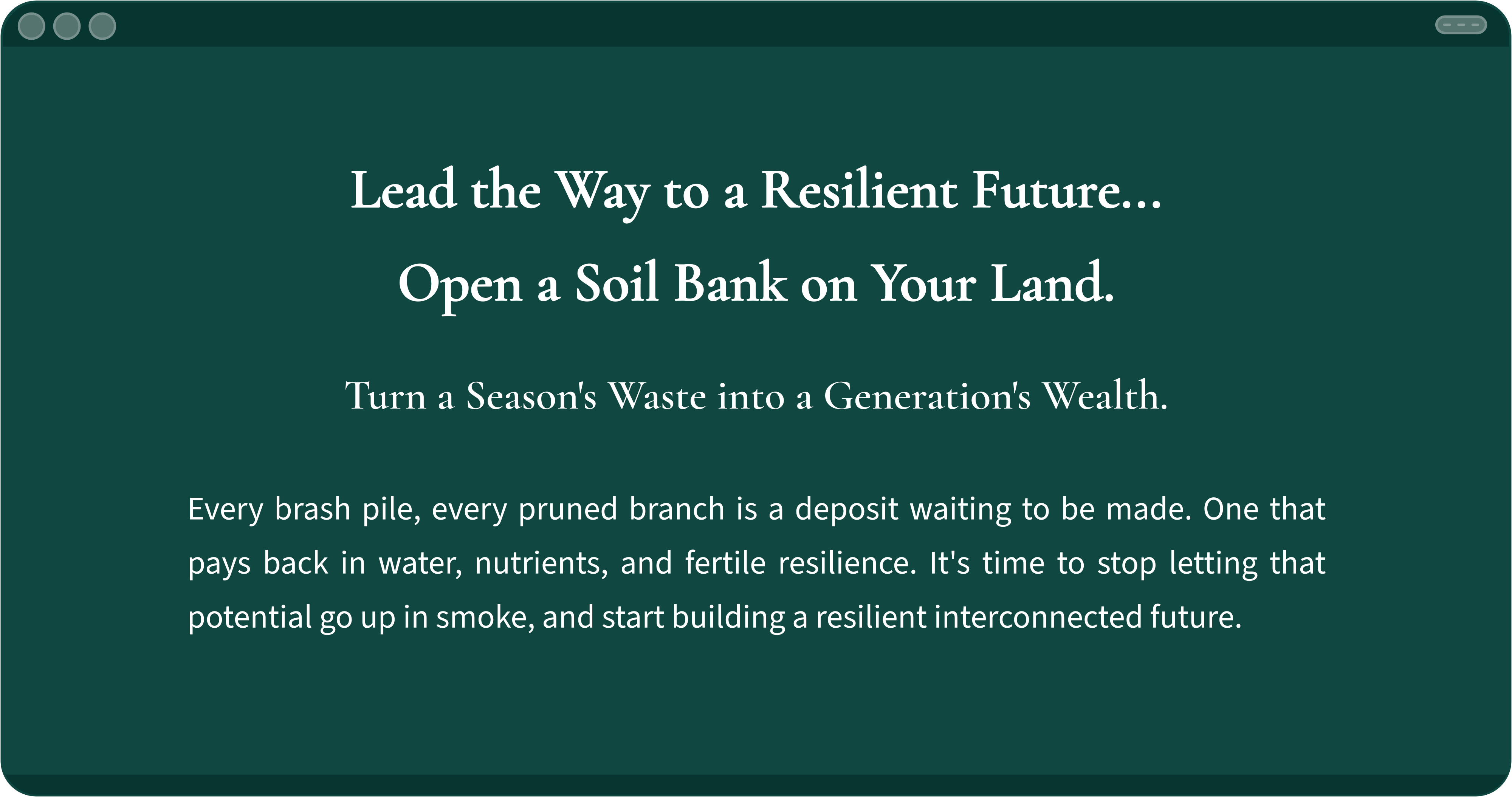
Instead of opening with a product ('Buy a Kiln'), the hero leads with an aspirational identity ('Lead the Way'). This reframes the visitor's relationship with the technology — from buyer to steward — before a single specification is listed.
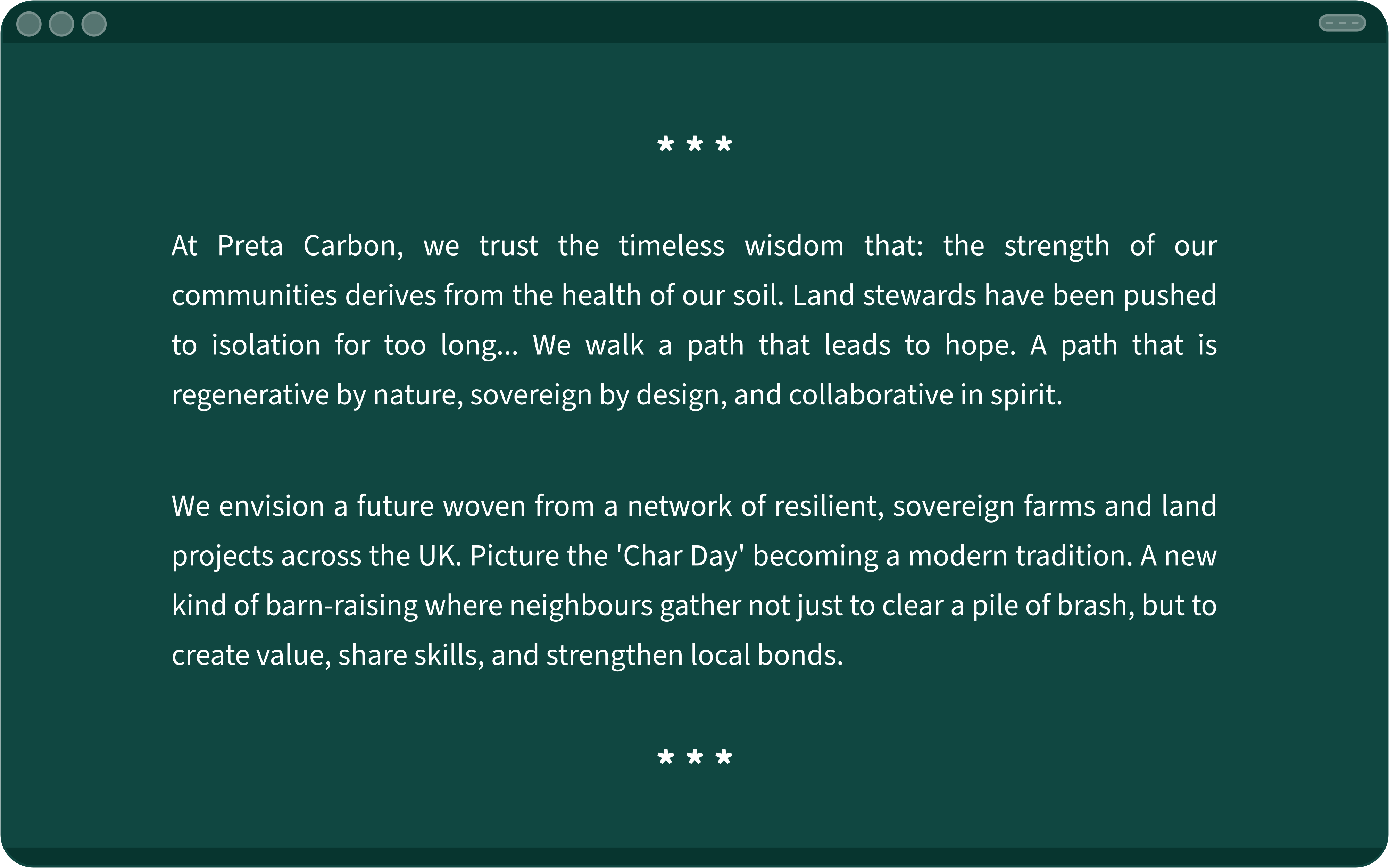
This section moves beyond the product to articulate a structural position on the problem. By naming the source of the issue — isolation, extractive systems — and declaring a shared direction, the copy opens a channel for genuine inquiry.
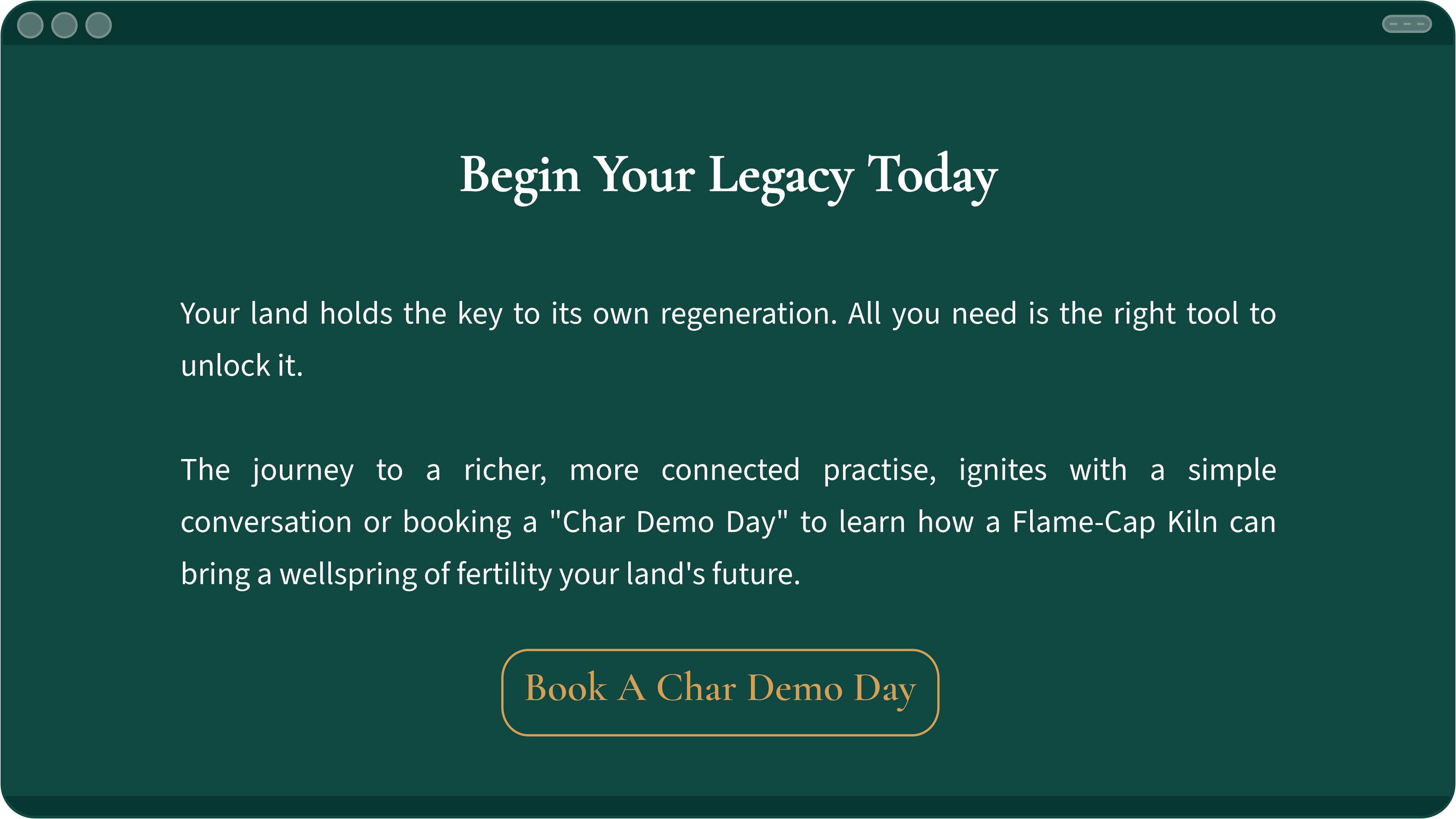
The final invitation is framed as a logical next step. 'Book A Char Demo Day' is presented as the beginning of a working relationship, offering a tangible, field-based experience rather than demanding immediate capital.

Facing a Similar Challenge?
This origin case demonstrates the full Three Successions methodology — from removing the sediment, establishing the source, and establishing the habitat.
If you are facing a similar translation challenge — complex work that deserves clear language — the channel can be cleared.
…Conscious Copy